It was a typical afternoon at my clinic when a 15-year-old patient walked in worried. “Dr. smith, my teeth look so yellow with these braces,” he said. He held back his cheeks and moaned that the brackets on his teeth seemed to hide yellow stains that he couldn’t clean.
This scenario is familiar to many orthodontists: a young teen excited for a straighter smile but anxious because of unwanted discoloration. Braces can trap food and make oral hygiene harder, so it’s natural to ask, “What can I do about teeth whitening with braces?”
In this article, we’ll cover everything from the basic reason behind braces staining to safe whitening options before, during, and after orthodontic treatment. We’ll answer common questions like “Can i use a teeth whitening kit with braces?”, “How about using a whitening kit or light with braces?”, “Is overnight whitening possible?” and more. Our goal is to give you expert, trustworthy advice so you can maintain a healthy, bright smile throughout your orthodontic journey with teeth whitening braces.
Why Braces Often Cause Stains and Spots?
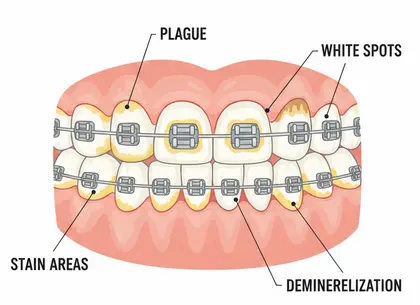
Braces work by bonding brackets and wires to your teeth (as shown above), but this coverage makes cleaning very challenging. Brackets block toothbrush bristles and floss from reaching all surfaces, so plaque and food debris get trapped.
Over time, acids from trapped plaque strip minerals from the enamel, causing white spots and staining. In fact, Colgate notes that it’s not the metal braces themselves that stain teeth, but rather the bacterial biofilm that builds up around the. Common beverages like coffee, tea, soda or sports drinks can seep under the brackets and stain the enamel beneath. If oral hygiene slips even slightly, you may see yellowing or white patches once the braces come off.
- Plaque acids under brackets cause demineralization and white spots on enamel.
- Brackets and wires trap food, so even brushing well might miss areas, leading to stains.
- Gingivitis and plaque also raise the risk of yellow teeth during treatment.
To prevent most of these issues, a rigorous oral care routine is essential. Brushing at least twice a day (especially after meals) and flossing with a threader or water flosser can remove stuck food.
Using a fluoride toothpaste and rinsing with a fluoride mouthwash helps protect enamel. (In fact, a toothpaste with stannous fluoride can reduce plaque around braces.) Still, even with perfect brushing, some degree of staining or spot formation is common. That’s why many orthodontists recommend waiting until after braces are removed for full whitening. But let’s address the timing more directly next.
Can I Whiten My Teeth Before Getting Braces?
Many patients wonder if they should brighten their teeth before orthodontic treatment. In practice, you can whiten your teeth before braces, but the benefits depend on you. According to me and many other specialists, whitening prior to braces is an good because after having braces you can’t go rough with your teeths, we have discussed it below it “after braces” section with detail.
However it is not beneficial for the long time because, Primary reason for braces is fixing crowded or misaligned teeth, pre-whitening is usually unnecessary. Teeth naturally shift during orthodontics, and any minor discoloration that occurs is often best dealt with after the braces.
In practical terms:
- Pros of pre-braces whitening: You’ll begin treatment with a whiter smile, which can be motivating. Some dentists feel it’s “a better idea” to whiten first because after bracess you can’t do whitening things for certain time.
Keeping Your Teeth White During Braces (Safe Whitening Methods)
Once braces are on, full-scale whitening treatments aren’t typically advised. The bleaching gels in most whitening kits cannot reach under brackets, and using them can cause uneven color or damage. But that doesn’t mean you’re stuck with a dull smile until braces come off.
Here are my-recommended strategies to maintain a clean, bright smile during orthodontic treatment:
- Excellent Oral Hygiene: (Don’t Brush within 24hrs after braces) This is the cornerstone. Brush at least twice a day with fluoride toothpaste (ideally an orthodontic-friendly or whitening formula) and floss after every meal. Use a soft-bristled toothbrush or an electric toothbrush, many electric brushes have orthodontic brush heads that gently clean around braces more effectively. Flossing is crucial: use a floss threader or orthodontic flosser to clean under wires. Rinsing with water or an antiseptic mouthwash after eating helps dislodge food.
- Regular Professional Cleanings: Keep your twice-yearly dental cleanings (or even more frequently). Dental hygienists have special tools to remove plaque and polish the areas around braces that are hard to reach. These cleanings are essential during orthodontic treatment. They help prevent stains from setting in. As i often said to my patients, deep cleanings help keep exposed tooth surfaces polished and catch any early spots of staining .
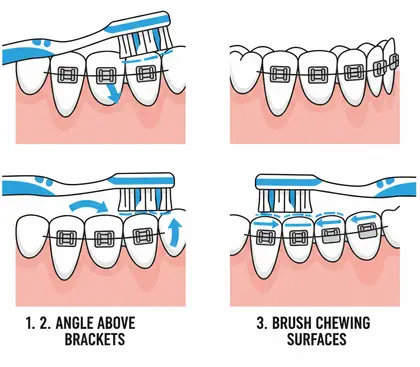
- Whitening Toothpaste & Rinses: Over-the-counter whitening toothpastes (with mild abrasives like silica) and whitening mouthwashes can help lift surface stains every day. Use them as part of your routine: brush 2 times daily with a whitening toothpaste, and rinse once a day with a whitening mouthwash. These products are safe with braces and can gradually brighten the exposed tooth areas. (Just avoid very abrasive formulas if you have sensitivity.) Because braces cover some tooth surfaces, toothpaste and mouthwash won’t change the color under the brackets, but they help prevent new stains on the rest of the enamel.
- Hydrogen Peroxide (H₂O₂) Rinse: Occasionally using a gentle hydrogen peroxide rinse can help. Mix equal parts 3% hydrogen peroxide and water, and swish for about 30 seconds. This mild bleach can break down stains on exposed enamel. Limit this to 2-3 times per week and always dilute it well to avoid irritation (Never swallow the rinse.) Some patients find it helps make their teeth look a bit brighter. Remember, though, it won’t whiten under brackets, and too much peroxide can irritate gums.
- Baking Soda Paste: A DIY baking soda paste can scrub away stubborn surface stains. Make a paste with baking soda and water, apply it gently with a soft toothbrush on the tooth surfaces (avoiding direct scrubbing on braces), then rinse thoroughly. Use this sparingly (about once a week) to avoid enamel erosion. Baking soda is only mildly effective, but as the Orthodontics Scottsdale guide notes, it’s a safe way to support whitening during braces when done carefully.
- Whitening Pens (Exposed Areas Only): Whitening pens (gel applicators) can brighten just the visible parts of your teeth. If you choose a whitening pen, apply the gel only on the sections of enamel not covered by brackets. Follow the product directions (usually once or twice a day for 10 minutes). This targets surface stains around the brackets. But be cautious: these gels may contain peroxide that can irritate braces and gums if overused. Always do a spot test and consult your orthodontist first.
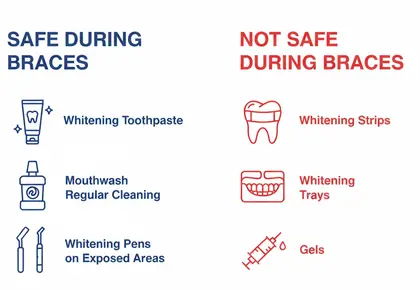
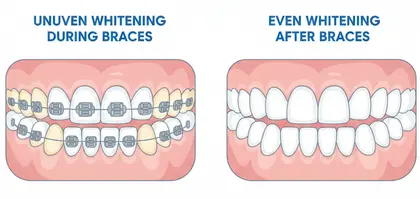
- Avoid Whitening Strips, Trays and Gels: This is important. Whitening strips, tray-based gels, or any bleach-based products are not recommended with fixed braces. The reason is simple: these treatments bleach exposed enamel only, leaving the enamel under brackets untouched. If you used strips or trays now, once your braces are removed you’d get a “two-tone” smile, a brighter shade where the strips could touch and a darker shade where the brackets were. Also, whitening gels can seep under brackets and weaken the glue, risking bracket loosening. In short, skip any DIY whitening kit that involves teeth trays, strips, or gels while you have metal braces. (By contrast, if you have clear removable aligners, these might be an exception, see below.)
- Professional/Orthodontist-Approved Whitening: If you’re looking for stronger results during treatment, discuss options with your orthodontist or dentist. They may approve in-office treatments that carefully protect braces and gums. For example, some dentists can apply a custom whitening gel around brackets in the office, or use a controlled blue LED light after treatments during appointments. These treatments are done under supervision to avoid sensitivity and avoid contact with brackets. Always consult first, do not attempt powerful office bleaches on your own with braces.
Teeth Whitening After Braces:
The most effective time to whiten is after your braces are removed. Once the brackets and wires are gone, all tooth surfaces are accessible for cleaning and bleaching. You may notice that your teeth aren’t uniformly colored, perhaps some areas under the braces are darker or have white spots. That’s normal. The good news is that now you have many more whitening options.
- Professional Dental Cleaning: The first step after braces come off is a thorough professional cleaning. Your hygienist will polish away any plaque, tartar, or surface stains accumulated under the brackets. This often makes a big difference right away.
- Whitening Treatments: With braces removed, you can safely use whitening strips, gels, trays, and even in-office bleaching treatments that were off-limits before. Depending on how much staining you have, your dentist may recommend:
- Whitening toothpaste and mouthwash: Continue using these for maintenance.
- Whitening strips or over-the-counter kits: Now these will whiten all surfaces. They can be effective for mild discoloration.
- Professional take-home gel trays: Custom trays filled with dentist-strength gel can give dramatic whitening over 1-2 weeks.
- In-office whitening: Options like Zoom or LED light bleaching at the dentist’s office can provide quick results in one session. (If you have severe stains or uneven color, this is often the fastest fix.) The Kingstowne Dental team notes that professional whitening after braces is the best way to reverse years of staining in just one appointment.
Important: I suggest waiting a short period (about 4-6 weeks) after bracket removal before starting bleaching, especially if there are any sore gums or residual irritation. This “stand-down” period lets teeth rehydrate and gums settle.
- Dealing with White Spot Lesions: Sometimes braces leave behind chalky white spots (demineralized enamel). Standard bleaching may not fully erase these. In mild cases, fluoride treatments or remineralizing pastes can help blend them in. In stubborn cases, cosmetic solutions like resin infiltration (“Icon”) or composite bonding may be advised by a dentist. Veneers or microabrasion are also options for severe spots.
- Maintaining Results: After whitening, continue good habits. Use a straw for coffee or tea, rinse after acidic foods, and maybe switch to a whitening or sensitivity toothpaste if needed. A retainer still often needs cleaning too. Ask your orthodontist or dentist about an ongoing plan, for example, continuing professional cleanings every six months as before.
In summary, once your braces come off, embrace whitening to reveal that straight, bright smile you’ve been working toward. Many dental professionals, including our Kingstowne team, highly recommend a whitening step after orthodontics to fix any leftover stains or spots. With the braces gone, bleaching gels and lights can evenly reach each tooth, giving you the best, longest-lasting results.
Myth vs. Reality: Overnight Whitening with Braces
Overnight miracle whitening doesn’t exist, braces or not. Any product promising to make your teeth dramatically whiter in a single night should already be viewed skeptically, especially more with braces. The truth is that whitening, by its nature, takes time. Even professional treatments require multiple days of application to see a noticeable change.
While you’re wearing braces, your best bet is consistency and patience. There are no shortcuts. The idea of “whiter teeth overnight” is a myth. However, you can make small improvements by focusing on your bedtime routine:
- Nightly Brushing with Whitening Toothpaste: Brushing your teeth before bed with a whitening or fluoride toothpaste removes stain-causing debris so it can’t act overnight. Doing this nightly will help your teeth look their best each morning.
- Pre-Bed Rinse: A quick swish with plain water or a gentle fluoride rinse before sleeping helps clear acids and bacteria. (If your dentist agrees, a diluted peroxide rinse, as mentioned, can be done in the evening too.)
- If You Have Invisalign (Clear Aligners): There’s a caveat here: with removable aligners like Invisalign, you could potentially sleep while wearing them with a bit of whitening gel inside. Some patients apply a whitening gel into the aligners and sleep with them on; this lets the gel contact all surfaces and can accelerate results slightly. But note: you should only do this under your dentist’s guidance. Never try whitening overnight with traditional metal braces, since the brackets block the gel entirely.
Realistically, expect any whitening progress with braces to be gradual. Instead of expecting an overnight change, focus on maintaining good habits. As Orthodontics Scottsdale reminds us, “true overnight whitening isn’t possible”. The best approach is daily care. With time and consistency, you’ll emerge from braces with teeth that are as clean and bright as possible. Then, you can tackle any remaining stains in the final whitening step.
Tips to Prevent Stains While Wearing Braces
The best whitening plan is to never get very stained in the first place. Here are some key tips to keep your smile as white as possible during braces treatment:
- Brush and Floss Religiously: Flossing with braces is crucial. Use a floss threader or interdental brush to clean under wires, and consider a water flosser to blast away trapped food. Try to brush after every meal if you can. Even rinsing with water helps if you can’t brush immediately.
- Limit Staining Foods and Drinks: Avoid or reduce coffee, dark tea, red wine, cola, berries, curry, and other heavily pigmented foods. If you do indulge, brush or at least rinse soon after. Colgate’s braces-care tips stress that limiting sugary, acidic, or stain-causing foods is your best defense. Using a straw for drinks can also minimize liquid contact with teeth.
- Use Orthodontic-Friendly Products: Some products are designed for braces wearers. For example, Colgate, Ortho Defense Mouthwash or any fluoride rinse can help protect enamel around braces. There are even flossers and toothbrushes specially shaped for brackets. Always use a soft brush to avoid scratching bracket glue, and a toothpaste with fluoride (and optionally whitening agents) to rebuild enamel.
- Eat Smart Snacks: Stick to braces-friendly snacks like cheese, yogurt, fruits (hard fruits cut into pieces), and raw veggies. Avoid sticky candies or popcorn that get wedged in brackets. If you eat something staining, rinse with water immediately.
- Regular Dental Visits: Don’t skip your dentist/hygienist appointments. Let them know you have braces so they can thoroughly clean around them. This helps head off any minor stains or tartar build-up before it becomes a big issue.
- Avoid Tobacco: Smoking or vaping causes major staining, especially with braces. If you use tobacco, know that quitting will not only brighten your smile but also improve your overall health.
Conclusion:
The key is to focus on safe, gradual whitening methods during treatment, such as whitening toothpaste, careful brushing, professional cleanings, and orthodontist-approved products. Strong bleaching treatments should wait until your braces come off, when all tooth surfaces are finally exposed and can whiten evenly.
Once your orthodontic journey ends, you’ll have access to the full range of whitening options, from over-the-counter strips to professional in-office bleaching, which can lift away the stains that built up during treatment and give you your brightest smile. By combining daily care, patience, and post-braces whitening, you can finish treatment not only with straighter teeth, but a truly confident, healthy, glowing smile.